Holy Trinity Cathedral: Ethiopia's Royal Spiritual Center
July 06, 2025

We spent about two hours exploring the cathedral, fascinated by the royal tombs and intricate murals by Afewerk Tekle. The small ecclesiastical museum and the memorial sites for Ethiopian patriots made this more than just a religious visit.
Where Ethiopian royal history meets spiritual sanctuary, Holy Trinity Cathedral holds the final resting place of Emperor Haile Selassie. Discover a landmark that's part memorial, part museum, and entirely a window into Ethiopia's complex national story.
Need-to-Know Info Before Visiting Holy Trinity Cathedral
1+
images
Holy Trinity Cathedral Address
Holy Trinity Cathedral, Ras Mekonnen Avenue, Addis Ababa, Ethiopia
Holy Trinity Cathedral Opening Hours
- 🕒 Monday-Saturday: 8:00 AM - 6:00 PM
- 🕒 Sunday: 10:00 AM - 4:00 PM
- 🕒 Closed on Major Ethiopian Holidays
How to get to Holy Trinity Cathedral
- 🚗 By car: Accessible from Ras Mekonnen Avenue
- 🚌 Public transport: City buses 01 and 02 stop nearby
- 🚕 Rideshare: Uber and local taxi services available
What is Holy Trinity Cathedral known for?
- Final resting place of Emperor Haile Selassie and Empress Menen Asfaw
- Features massive Aksumite-style granite royal tombs
- Contains remarkable murals by renowned Ethiopian artist Afewerk Tekle
- Hosts a museum of significant ecclesiastical artifacts
- Memorial site for Ethiopian patriots and resistance fighters
What is Holy Trinity Cathedral in Addis Ababa?
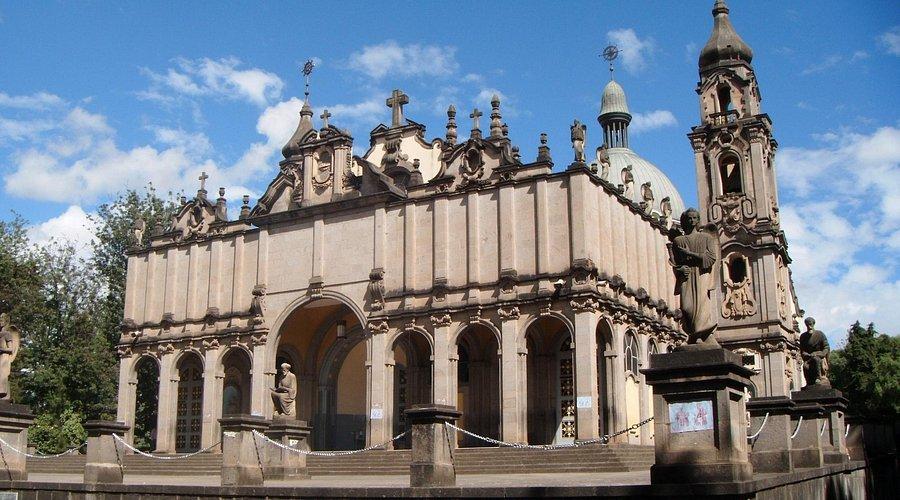
Holy Trinity Cathedral stands as a cornerstone of Ethiopian religious and national history, drawing thousands of visitors each year to its remarkable site in central Addis Ababa. More than just a place of worship, this 1930s cathedral serves as a powerful memorial ground housing the tombs of Ethiopia's most significant modern leaders, including Emperor Haile Selassie and Empress Menen Asfaw. Travelers and history buffs crowd the cathedral grounds to witness its unique architectural blend - a mix of Ethiopian Orthodox design and international architectural styles that tell stories of the country's complex past. The copper-domed structure captures attention with its intricate statues, spindly pinnacles, and carefully crafted stained-glass windows depicting biblical scenes. Photography enthusiasts find the exterior particularly compelling, with its mix of architectural elements creating a stunning visual narrative. Inside, the cathedral offers more than spiritual significance: visitors can explore a small museum of ecclesiastical artifacts and pay respects at memorials for Ethiopian patriots and resistance fighters who opposed foreign occupation. While international tourists make up a significant portion of visitors, the site remains deeply important to local Ethiopians, functioning simultaneously as a spiritual center, historical landmark, and national memorial.
Top things to do at Holy Trinity Cathedral
- Explore Afewerk Tekle's stunning Holy Trinity mural featuring biblical figures Matthew, Mark, Luke, and John
- Visit the small ecclesiastical museum showcasing rare religious artifacts from Ethiopian Orthodox history
- Examine the intricate stained-glass windows depicting Old and New Testament scenes
- Pay respects at the royal tombs of Emperor Haile Selassie and Empress Menen Asfaw
- Discover the memorial sites honoring Ethiopian patriots who fought against Italian occupation
- Admire the two imperial thrones crafted from white ebony, ivory, and marble
🎟️ Tickets and Entry
Visitors can purchase tickets at the administration office located 20 meters west of the main gate. Self-appointed guides are available and typically charge between 20-30 Ethiopian Birr per person. The entrance fee includes admission to a small museum of ecclesiastical artifacts located in the cathedral grounds.
👕 Dress Code
As a religious site, visitors should dress modestly. Recommended attire includes clothing that covers shoulders and knees. Avoid shorts, sleeveless tops, and revealing clothing out of respect for the cathedral's spiritual significance and local cultural norms.
📜 History of Holy Trinity Cathedral
- 1930s: Cathedral constructed during the era of Emperor Haile Selassie
- 1974: Memorial established for ministers killed by the Derg regime
- 1956: British suffragette Sylvia Pankhurst moves to Addis Ababa and later becomes closely associated with the site
- 2012: Tomb of Prime Minister Meles Zenawi added to the cathedral grounds
❗ Tips for Visitors
- Photography is strictly forbidden in certain memorial areas
- Allow at least 1-2 hours for a comprehensive visit
- Bring water and comfortable walking shoes
- Check local guidelines about photography and quiet zones
- Consider hiring a local guide for deeper historical context
What are some interesting facts about Holy Trinity Cathedral?
- The cathedral is one of the few places in Ethiopia where a British suffragette, Sylvia Pankhurst, is buried - a rare international connection to the site
- Despite being a religious site, the cathedral serves as an important national memorial, housing tombs of political leaders and resistance fighters
- The cathedral's unique architectural style blends Ethiopian Orthodox design with international influences, making it an unusual architectural landmark in Addis Ababa